 Please rotate your phone to landscape mode.
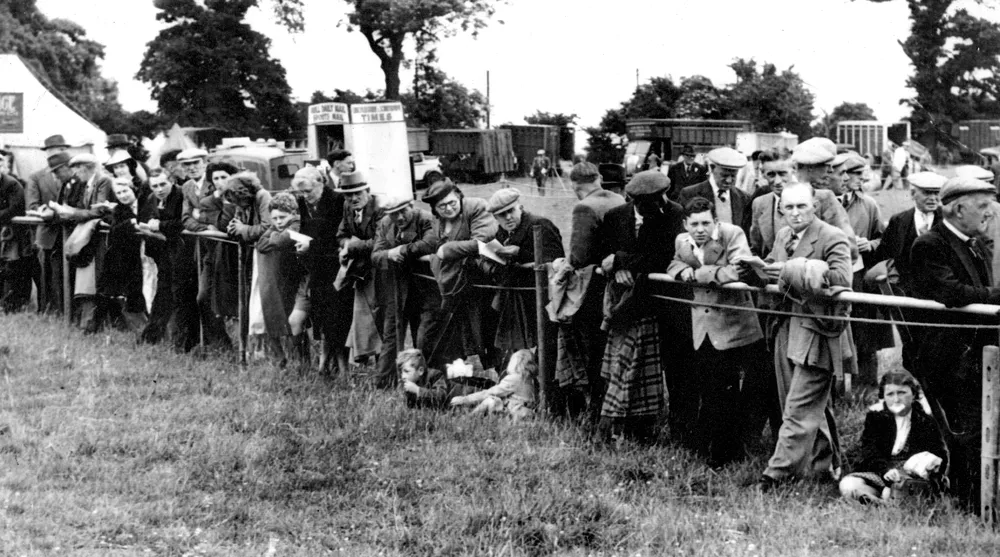
Life During the 1940s (The War Years)
A "Thankful Village": Thorngumbald is often cited as a "Thankful Village"—specifically one of the rare "Doubly Thankful Villages." This means that all the men from the village who went off to fight in both World War I and World War II returned home safely. While many neighboring towns lost entire generations, Thorngumbald’s memorial records reflect this unique, fortunate history.
Defenses and Security: Because of its proximity to the Humber Estuary and the coast, the surrounding area was heavily fortified. You would have seen anti-tank blocks, barbed wire along the beaches, and concrete pillboxes in the nearby fields to defend against potential invasion.
The Blitz Influence: While Thorngumbald itself was rural, its residents had a front-row seat to the Hull Blitz. The village likely hosted evacuees from the city, and the night sky would have been frequently lit by fires and anti-aircraft fire from the Hull docks.
Life in the 1950s (Post-War Recovery)
The Railway Era: During this decade, the village was still served by the Hull and Withernsea Railway. Residents would use the Ryehill and Burstwick station (just a short distance away) to travel into Hull for shopping or work. The line was a lifeline for the village until its closure in 1964.
Thorngumbald Hall: The Hall remained a central landmark. While it has a long history involving whaling magnates and local lords, by the mid-20th century, it was transitioning toward its eventual use as a care home (now known as Thorn Hall).
Village Amenities: The social hub was The Royal Mail public house (a 19th-century building that stood until 2017). Life was centered around the parish church of St. Mary’s and the Methodist chapel (built in 1904).
Expansion: It was during the late 1950s that the village began to see the very first signs of the housing developments that would eventually triple its population by the late 20th century. Before this, it was largely composed of ribbon development along the main A1033 road.
Notable Memories
For a deep dive into personal accounts from this specific era, the East Riding Archives hold a memoir by Madge Foster (née Brown) titled "The Place we Called Home." She documents her memories of school, neighbors, and domestic life in Thorngumbald during the 1940s, providing a vivid picture of the "hidden" history of the village.
